Enterprise Service Management, or ESM, is a model that applies IT service management best practices across all departments of an organization. Its goal is to centralize requests, standardize processes, automate tasks, measure performance through SLAs, and improve the experience of employees, customers, and internal teams.
- How Does Enterprise Service Management Work?
- Key Features of an ESM Solution
- Signs That Your Organization Needs ESM
- Benefits of Implementing ESM in the Organization
- ESM Use Cases by Department
- Differences Between ITSM and ESM
- What ESM Software Should Include
- ServiceTonic: A Solution to Optimize Enterprise Service Management
- How to Implement ESM in an Organization
- Trends in Enterprise Service Management and the Future of ESM
- Frequently Asked Questions About ESM
In practice, ESM turns areas such as Human Resources, Finance, Legal, Procurement, Operations, or Facilities into internal service providers, with catalogs, owners, workflows, metrics, and continuous improvement.
How Does Enterprise Service Management Work?
Enterprise Service Management combines organization, technology, and processes to standardize the way user and customer requests are managed across the entire organization. To achieve this, it is based on:
- Defining which services are offered within the service catalog.
- Managing any request from a single platform, such as ESM software.
- Standardizing execution through business rules and workflows.
- Measuring performance through SLAs.
- Driving continuous improvement based on real, measurable data.
Key Features of an ESM Solution
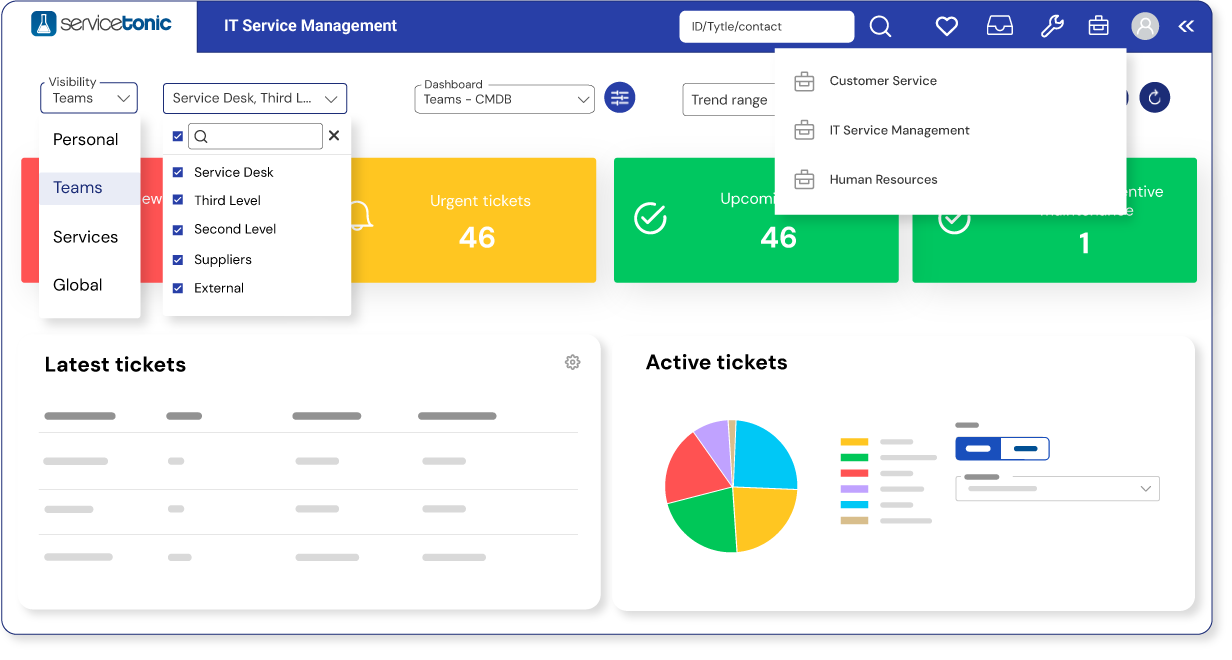
An Enterprise Service Management (ESM) tool should include functionalities that centralize service management, optimize processes, and improve the user experience. These features are essential to ensure efficient operations and proper coordination between the different departments of the organization.
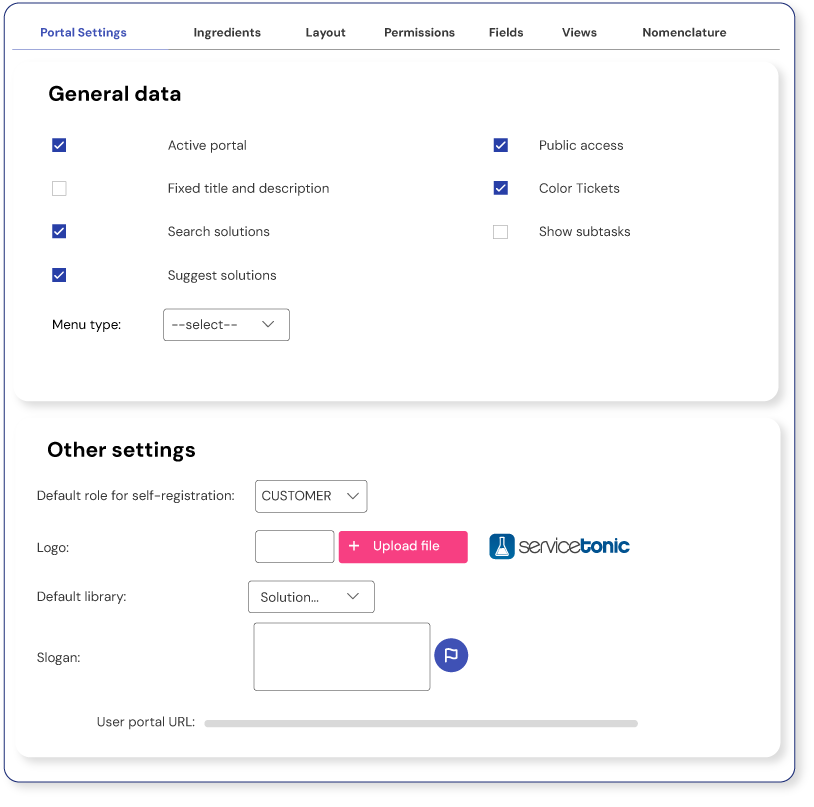
- User portal and self-service: allows users to submit requests, consult information, and track their requests independently. Learn more about our user portal and self-service.
- Service catalog: organizes the available services so that each user knows what they can request, how to do it, and what information they need to provide. Learn more about our service catalog.
- Knowledge base: centralizes guides, procedures, and useful answers to encourage self-service and reduce repetitive requests. Learn more about our knowledge base.
- Automation and workflows: enables the automation of tasks, assignments, approvals, and notifications to reduce manual processes. Learn more about our workflow automation.
- Reports and metrics: provides data on response times, request volume, and service performance to support continuous improvement. Learn more about our reports and metrics.
A solution like ServiceTonic brings these functionalities together in an intuitive and customizable platform, helping centralize requests, automate processes, enable self-service, measure performance, and identify opportunities for improvement.
Signs That Your Organization Needs ESM
In many organizations, the need for an ESM model does not appear as a strategic decision, but rather as a response to friction that builds up over time.
The most common signs are:
- Excessive use of email and scattered tools
- Inconsistent processes across departments
- Lack of visibility into requests
- Too many manual tasks
- Absence of metrics and control
Without data on response times, request volume, or team workload, improvement is not possible. What is not measured cannot be managed, and what is not managed ends up depending on each person’s goodwill.
Discover when an organization needs ESM software.
Benefits of Implementing ESM in the Organization
Centralizing service management on a single platform has an immediate impact: teams stop wasting time coordinating by email, requests no longer fall through the cracks between departments, and managers have real data to make decisions. These are the most direct benefits of adopting an ESM model.
Main benefits of ESM:
- Improved productivity
- Reduced response times
- Greater control and traceability
- Better decision-making
- Increased user satisfaction
Learn about the benefits of ESM for the company.
ESM Use Cases by Department
ESM can be applied to any department that manages requests, approvals, internal inquiries, or repetitive processes. Here are some common examples:
| Department | Common Requests | Possible Automation | Useful Metric |
|---|---|---|---|
| HR | Holidays, onboarding, certificates | Automatic manager approval | Average resolution time |
| Finance | Invoices, payments, expenses | Workflow by amount and cost center | Requests outside SLA |
| Legal | Contract review, internal inquiries | Assignment by contract type | Review time |
| Facilities | Maintenance, rooms, access | Prioritization by urgency/site | Recurring incidents |
| Procurement | Purchase requests, suppliers | Approval by amount | Purchase cycle time |
Each request is logged, assigned, and tracked, making it easier to control deadlines and manage sensitive information.
Differences Between ITSM and ESM
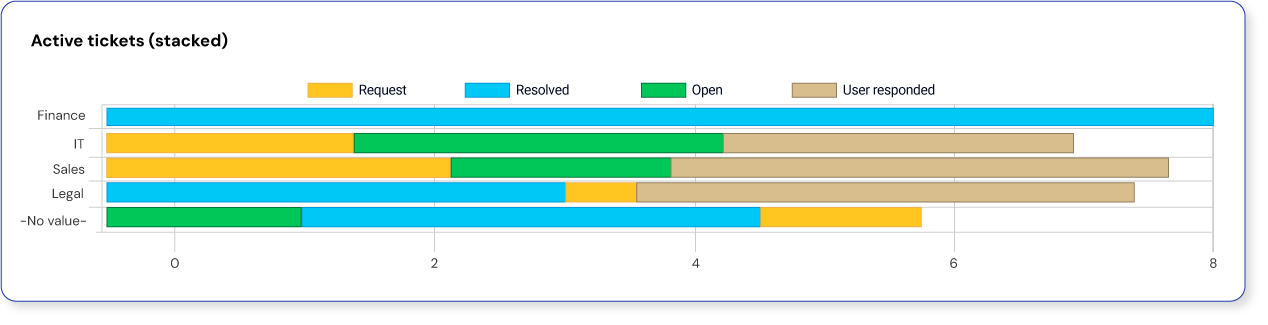
Although ITSM (IT Service Management) and ESM (Enterprise Service Management) share principles and methodologies, there are key differences in their scope, application, and objectives within the organization. While ITSM focuses on managing IT support services, ESM extends this approach across the entire organization, integrating processes and services in areas such as Human Resources, Finance, Legal, Operations, Facilities, or Customer Service.
Main differences between ITSM and ESM:
| Criterion | ITSM | ESM |
|---|---|---|
| Scope of approach | Focuses on managing technology support services and organizing IT-related processes. | Extends this model across the entire organization, including areas such as Human Resources, finance, Operations, and Facilities, providing more global and structured management. |
| Users and departments | Mainly aimed at users of technology services, such as employees who need IT support or internal teams related to technology. | Covers employees, departments, and different business areas, enabling cross-functional service management and greater responsiveness. |
| Business objectives | Seeks to ensure the efficiency, continuity, and quality of IT services, making sure the organizations has the right support technology in place. | Seeks to optimize business processes as a whole, improving productivity, user experience, and access to a shared knowledge base across the organization. |
| Organizational maturity level | Usually the first step toward structured service management, typically initiated in the IT department. | Represents a more advanced level, where the organization applies service management best practices globally to achieve greater efficiency, strategic alignment, and better project management. |
Learn more about the differences between ITSM and ESM.
What ESM Software Should Include
Good ESM software should make it possible to centralize requests from different departments, create service catalogs, automate workflows, define SLAs, offer a self-service portal, maintain a knowledge base, generate reports, and adapt to each area’s processes without constantly depending on technical development.
In addition, a good ESM solution should be flexible and configurable to adapt to the needs of areas such as Human Resources, Finance, Legal, Operations, Facilities, or Customer Service. The goal is not only to log requests, but also to organize service delivery, improve traceability, and enable more efficient management across the entire organization.
You can explore these features in detail in our ESM software for enterprise service management.