
A help desk solution lets you centralise requests received by email, chat or WhatsApp, automate processes and track every request through a ticketing system. Each incident has an owner, a priority and a communication history, which makes coordination between support teams much easier.
However, the needs of an online store are not quite the same as those of a chain with several locations. Which features really matter? How should you handle orders, complaints and service requests? What role do Artificial Intelligence, automation and integration with corporate systems play?
The key is to choose a help desk solution that meets the needs of your eCommerce or retail business, adapts to your processes and lets you expand support as the business grows.
How do you know if your eCommerce or retail business needs a help desk?
An eCommerce or retail business needs help desk software when the volume of enquiries and incidents makes it hard to manage support tickets, coordinate teams or meet resolution times.
These are some signs that your company needs a help desk:
- Scattered requests: you receive enquiries by email, phone, live chat or WhatsApp and find it hard to follow them up. Inboxes are overloaded and some requests may go unanswered.
- Lack of control: you don’t always know who is handling each ticket, what its priority is or how long it has been pending.
- Manual processes: your teams spend too much time classifying, assigning and updating incidents.
- Repetitive enquiries: many requests could be solved through self-service or Artificial Intelligence.
- Difficulty meeting SLAs: you need to control response and resolution times for each service.
- Incidents across different stores: you handle breakdowns, IT problems, maintenance requests or equipment needs in several locations.
- Multiple teams and departments: IT, HR, Facilities and Customer Service need to coordinate their requests and processes.
Help desk software for eCommerce lets you centralise support tickets, automate tasks and resolve incidents faster. It also makes coordination between stores and departments easier, improving team efficiency and the quality of the services you provide.
What features should a help desk for eCommerce and retail include?
When choosing a help desk solution for eCommerce and retail, check that its features meet the real needs of the business: handling order and return enquiries, centralising customer service and coordinating incidents across different stores.
These are the ten features worth assessing to organise support, improve agent productivity and adapt the service as the company grows.
1. Centralised ticket management
A good ticketing system should record every enquiry or incident with an owner, status, priority and communication history. Ticket management keeps requests under control, makes them easier to follow up and provides information to improve the service.
2. Multichannel support
An eCommerce business receives enquiries about products, orders and returns through different channels. The software should centralise requests received by email, phone, live chat, WhatsApp and the user portal, keeping each ticket’s history so agents can provide continuous support whatever channel the customer uses.
3. Automation
Business rules let you classify, prioritise, assign and escalate tickets automatically, as well as send notifications and predefined responses.
This automation reduces manual work, speeds up incident management and helps keep support processes consistent.
4. SLA control
SLA management lets you set response and resolution times by request type and configure alerts for potential breaches.
This helps you prioritise the most urgent incidents and keep your service commitments under control.
5. Artificial Intelligence
A help desk with AI can help answer common questions about shipping, returns or warranties through Virtual Agents trained on your company’s information.
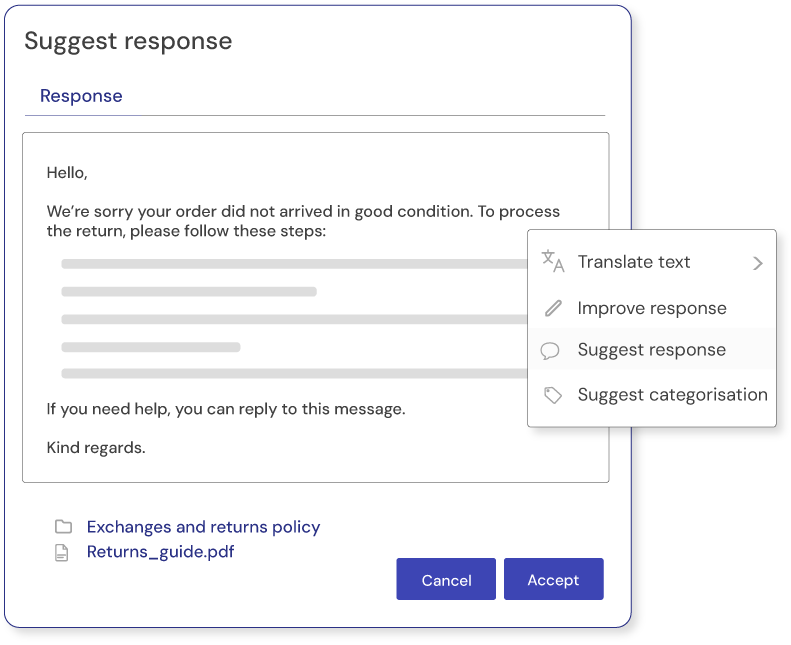
In addition, tools such as ServiceTonic Copilot can summarise incidents and generate suggested responses, reducing the time agents spend on each enquiry.
6. Knowledge base and self-service portal
A knowledge base brings together information about products, shipping, warranties and return policies. If it is available from the self-service portal, customers can solve common queries without contacting the support team.
In retail companies, it can also be used to share internal procedures and solutions to frequent incidents among employees in different stores.
7. Reports and dashboards
To improve the quality of support, you need to know how many requests the team receives, how long it takes to respond and which problems come up most often.
Custom dashboards let you analyse indicators such as ticket volume by channel, response times, SLA compliance and agent performance, making it easier to spot opportunities for improvement.
8. Scalability and support for multiple departments
A growing eCommerce business may need to add new agents, support channels or services. In a retail chain, it may also be necessary to extend the help desk to different stores and departments.
That is why it is worth choosing a tool that can handle both customer service and service requests for IT, HR or maintenance, without having to use separate platforms for each area.
9. Integration with company systems
A help desk should integrate with the corporate tools your company already uses, such as email, the user directory, the ERP or the CRM.
Assess the integrations available, the API connection options and the ability to exchange information with other systems. This reduces duplicate work and gives agents access to the data they need to handle each request.
10. Security
A help desk may store personal data, order information and customer service histories. That is why it is important to check the security measures, access controls and guarantees offered by the provider.
ServiceTonic holds ISO 27001 certification and offers cloud or on-premise deployment, so the installation can be adapted to each company’s needs.
What needs should a help desk for eCommerce cover?
Besides having the right features, help desk software for eCommerce should handle the situations that typically arise during the purchase and in after-sales customer service.
These are some of the processes worth considering when choosing a solution.
Handling enquiries about orders, returns and complaints
Requests about an order’s status, a delayed delivery or a product return need organised follow-up to avoid lost information and delays.
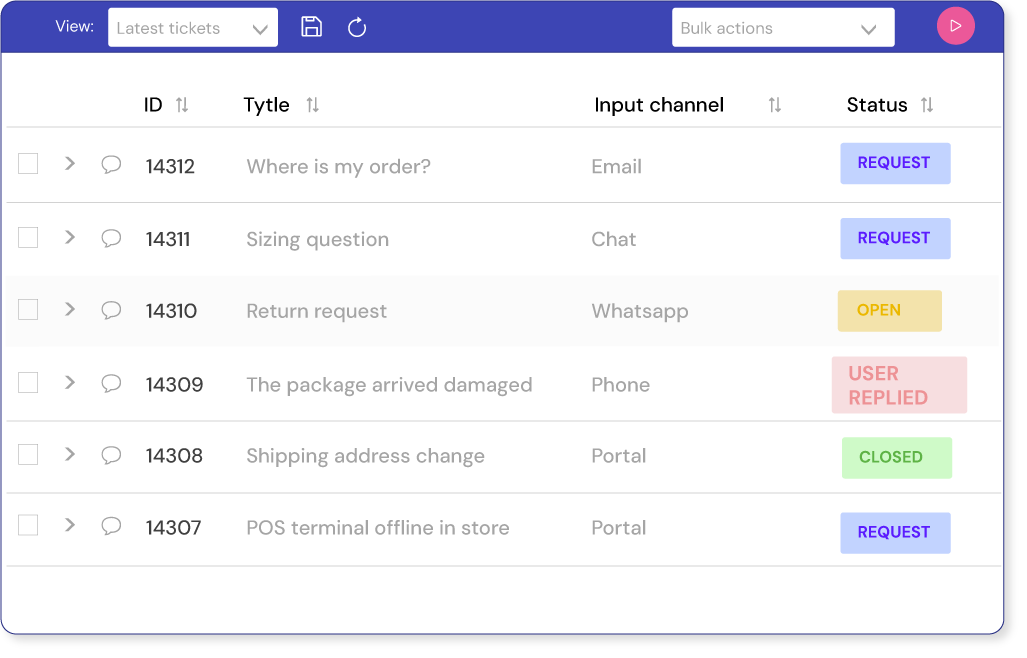
A ticketing system lets you record these enquiries, assign them to the right team and keep a history of every action taken. Agents can then see the status of each incident and give the customer up-to-date information.
Supporting customers before and after the purchase
Not every request is about an incident. Customers also need information about products, availability, features, warranties or terms of purchase.
A help desk should make it easy to handle these enquiries through channels such as live chat, email or WhatsApp, giving the agent access to the context of the conversation so they can provide personalised answers.
This way, support can accompany the customer throughout the buying process instead of only solving problems after the sale.
Tracking incidents that involve several teams
Some requests need input from different departments. For example, a delivery complaint may require collaboration between Customer Service and logistics, while an invoice issue may need the finance team to step in.
A tool that lets you assign owners, set priorities and check the status of each ticket makes this coordination easier and saves customers from repeating their query every time a new agent gets involved.
Handling these situations well means more organised support and a better customer experience throughout the buying process.
What should a help desk for retail companies with multiple stores include?
In a retail chain, support needs go beyond customer service. Each store also has to manage IT incidents, breakdowns, facility maintenance and employee requests.
That is why you need a help desk solution that centralises tickets and service requests from every store, makes coordination with head office easier and keeps track of each incident.
A shared knowledge base also helps employees look up company procedures and solve common problems without constantly relying on support agents.
This way, the company can organise IT, HR and maintenance service management from a single platform, with an overall view of the incidents and needs of each store.
Optimise customer support by improving your KPIs
Besides managing enquiries and requests, a good help desk should let you assess the quality of support and the performance of your teams. So when choosing a tool, consider which indicators it can measure.
The quality of customer service should not be measured only by the number of tickets resolved. It is also important to analyse indicators that show response speed, team effectiveness and the user experience.
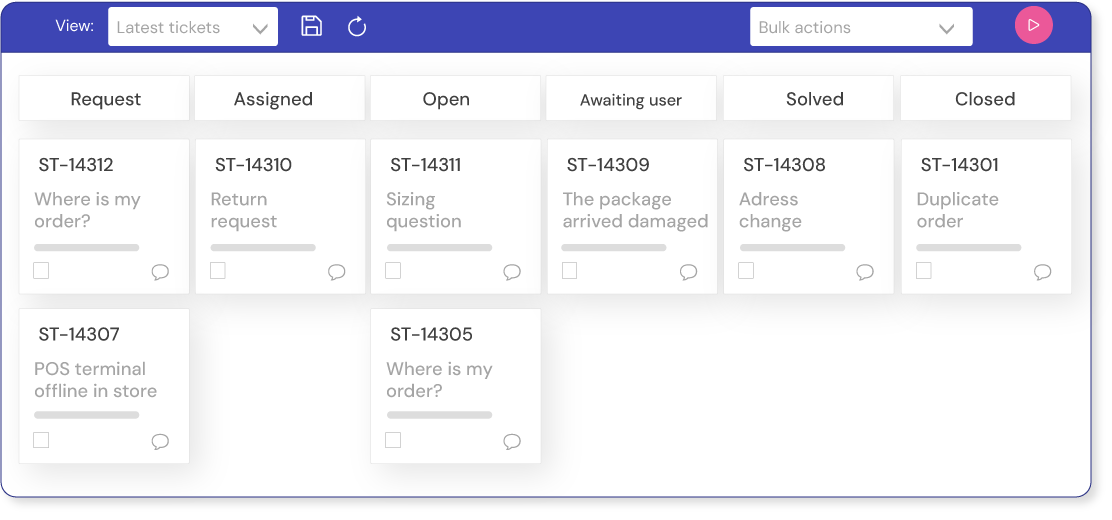
Good help desk software should make it easy to track this data, helping you identify recurring problems, spot opportunities for improvement and make decisions to optimise the service.
| Indicator | What it measures |
|---|---|
| First response time | How long a customer waits before receiving attention |
| Resolution time | How long it takes to resolve a request |
| SLA compliance | What percentage of requests are handled within the agreed deadlines |
| First contact resolution | How many enquiries are solved without further contact |
| Ticket volume by reason | Which problems generate the most requests |
| Customer satisfaction | How users rate the support they received |
How do you handle peaks in demand in eCommerce?
During campaigns such as Black Friday, Christmas or the sales, enquiries about orders, deliveries, returns and product availability can rise sharply. To keep support responsive and stop the team from being overwhelmed, it is important to prepare the help desk before the busiest periods.
Help desk software with automation and Artificial Intelligence lets you handle a higher volume of requests, reduce repetitive enquiries and optimise the support service, prioritising incidents that need immediate attention.
To prepare your eCommerce business for these peaks in demand, follow these recommendations:
- Boost self-service: update the knowledge base with answers about delivery times, returns, promotions and special campaign conditions.
- Use Artificial Intelligence: set up a virtual assistant to answer frequently asked questions automatically, even outside business hours.
- Automate classification: identify and categorise tickets by reason, such as orders, deliveries or returns, to make them easier to manage.
- Set priorities: define specific rules and SLAs for urgent incidents, such as delivery problems or complaints that need a quick response.
- Optimise ticket assignment: distribute requests automatically according to each agent’s availability, workload and expertise, avoiding backlogs and speeding up resolution.
- Monitor the results: check the dashboards to spot increases in requests, detect delays and reallocate resources when needed.
Preparing the help desk before the busiest periods helps you organise requests better, make the most of automation and reduce the workload of support agents.
A flexible, scalable tool helps maintain service quality even when the volume of enquiries rises, so teams don’t have to spend more resources on administrative tasks.
Why choose ServiceTonic for your eCommerce or retail business?
Once you have analysed the needs of your eCommerce business or retail chain, it is time to choose a tool that can adapt to your processes and support the growth of the business.
ServiceTonic combines ticket management, automation and Artificial Intelligence in one platform that handles both customer service and the company’s internal services.
This means you can use the same software to centralise your online store’s enquiries and manage IT, HR or maintenance incidents in your stores, without relying on separate tools for each department.
With ServiceTonic you also get:
- No-code configuration, to adapt forms, processes and automations to the way you work.
- Built-in AI, with Virtual Agents and Copilot to help resolve enquiries and support your teams’ daily work.
- Scalability, to add new agents, services, departments and stores.
- Specialist support, in Spanish and English, during implementation and while you use the tool.
- Certified security, with ISO 27001 and cloud or on-premise deployment options.
Find out how our help desk software for eCommerce and retail can help you improve customer service and organise service management across your company.
Frequently asked questions about help desks for eCommerce
How is a help desk different from customer service software?
Customer service software focuses on managing customer communications and requests. A help desk lets you record, assign and track incidents through tickets and, if it is multi-service, it can also handle internal requests for IT, HR or maintenance.
How do you centralise incidents in an online store?
Incidents in an online store are centralised with a multichannel help desk: every enquiry, complaint or order problem is recorded as a ticket in a single inbox, whether it arrives by email, WhatsApp or chat. Each ticket includes the customer’s history, a responsible agent and a response deadline.
Can the same help desk be used for customers and employees?
Yes. A multi-service help desk such as ServiceTonic lets you manage customer enquiries and internal employee requests from a single platform. Each department can have its own forms, workflows, owners and SLAs, keeping management independent and organised.
How does Artificial Intelligence help eCommerce customer service?
A help desk with AI can answer frequently asked questions, reduce repetitive tasks and speed up ticket management. ServiceTonic includes Virtual Agents and an AI Copilot to support both self-service and agents’ work.
Does a small eCommerce business need help desk software?
Yes. Help desk software lets you centralise enquiries, automate tasks and improve customer service, even with only a few agents. Choosing a scalable solution makes it easier for the business to grow without changing tools.
Can you manage returns, complaints and orders with a help desk?
Yes. A help desk lets you record, assign and track enquiries about orders, returns and complaints through a ticketing system, keeping a history of each request and improving response times.
Is a help desk for eCommerce or a Service Management solution better?
It depends on your company’s needs. If you only need to handle customer enquiries, a help desk focused on customer service may be enough. A solution with Service Management capabilities, such as ServiceTonic, also lets you manage internal requests for IT, HR, maintenance and other departments.
Conclusion
Choosing help desk software for eCommerce and retail means considering both your current customer service needs and the tool’s ability to adapt as the business grows.
Automation, omnichannel support, Artificial Intelligence and centralised ticket management all help make support more efficient. But it is also important to choose a provider that makes implementation, customisation and the evolution of the software easier.
With ServiceTonic you can centralise customer and employee support, automate processes and expand service management as your company grows.
Request a ServiceTonic demo and discover how to adapt our help desk software to the needs of your eCommerce business.