
Thanks to the CI booking functionality defined in the CMDB, users can book any asset through the ServiceTonic User Portal.
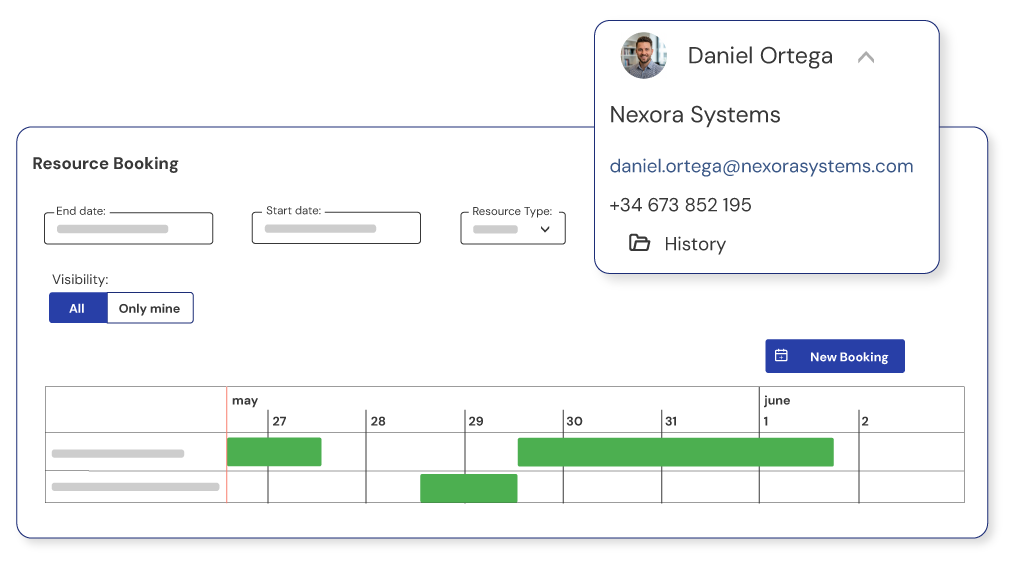
The Self‑Service Portal makes it easy for users to book CIs, while managers can continuously monitor their status, availability, and usage.
The possibilities are virtually endless: from technology assets managed by the IT department to meeting rooms, company vehicles, mobile devices, or any other resource that the administrator decides to add to the CMDB and make available to users through a booking system.
What is Asset Booking Management?
The Asset Booking Management feature allows users to reserve any organizational resource registered in the CMDB, whether it is an IT asset or a corporate resource. Typical examples include laptops, meeting rooms, company vehicles, audiovisual equipment, or any other item the organization decides to make available.
With this functionality, users can quickly and autonomously check resource availability and make reservations, while managers maintain full control over utilization and occupancy. To use the booking system, you need the CMDB module, which centralizes the management of configuration items (CIs) and organizational assets. From the CMDB you can define the characteristics, availability, and status of each resource, ensuring an efficient and reliable booking process.
How does CI booking management work in ServiceTonic?
Users can book any asset from the User Portal quickly and easily.
-
Go to the “Bookings” menu in the Portal sidebar.
-
Select the start and end dates for the booking.
-
Choose the type of resource you want to book.
-
Check the resource availability.
-
Click “New booking” to confirm the reservation.
Booking management by the administrator
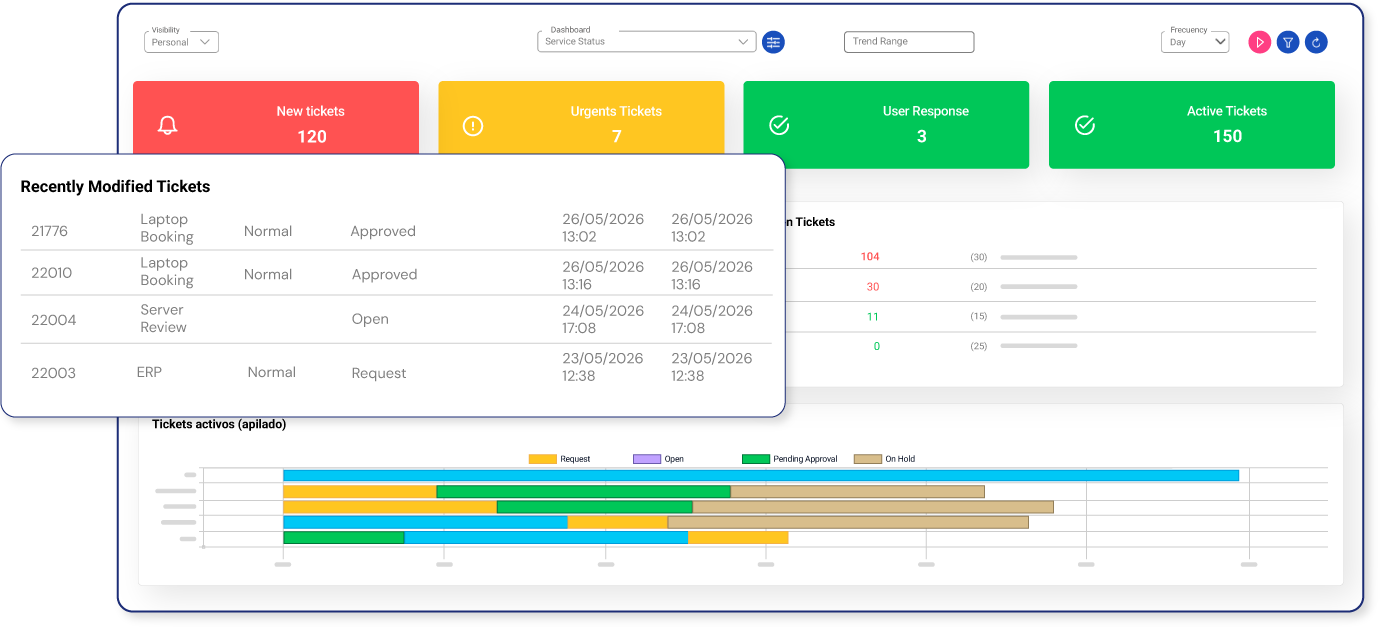
Each booking created by users from the Portal is automatically converted into a support ticket that agents can fully manage. This makes it possible to apply the same tracking, validation, and control processes used for any other request handled in ServiceTonic.
Agents can customize dashboards to centrally monitor and manage all bookings, viewing information in different formats such as booking lists, occupancy calendars, or panels with indicators and metrics. They can also create custom charts and reports to analyze resource usage, identify the most frequently booked assets, and see which users submit the most requests.
This simplifies planning, optimizes resource utilization, and provides a complete view of booking activity across the organization.
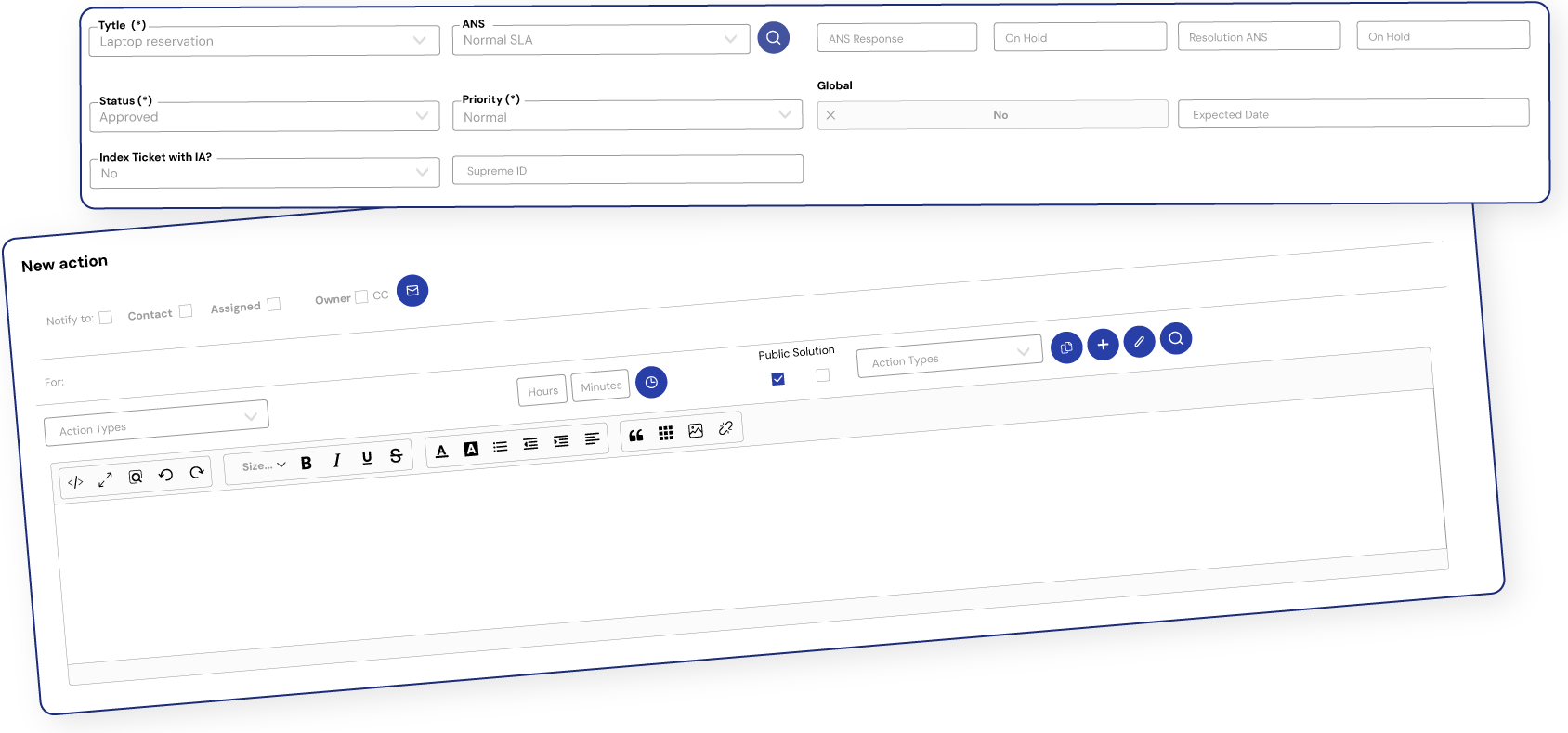
Now these tickets can be handled just like any other support ticket:
Who can benefit from booking management?
The booking management functionality is designed for any organization that needs to manage the availability and usage of its resources efficiently. It can be applied to IT assets as well as other corporate resources, such as meeting rooms, vehicles, audiovisual equipment, or shared devices.
With this system, users can check resource availability and make reservations independently, while managers gain full visibility into resource usage, occupancy, and status. Booking management is available both to end users and platform agents, with dedicated interfaces that adapt the experience to each profile’s specific needs.
Use cases
Asset bookings are not limited to a single department; many different areas may need to reserve resources.
IT booking
Employees and users may need to reserve laptops, monitors, tablets, mobile phones, and other resources to cover temporary needs, new hires, or business trips.
Meeting room booking
This is a shared asset across all departments, as employees can reserve meeting rooms for presentations, internal meetings, video conferences, and more.
Vehicle booking
For companies with corporate vehicles, managing bookings helps avoid conflicts and makes it easy to know which employee was responsible for a specific vehicle on a given date.
Flexible workspace management
In hybrid work environments, employees can reserve desks, offices, or coworking spaces for the days they come into the office.